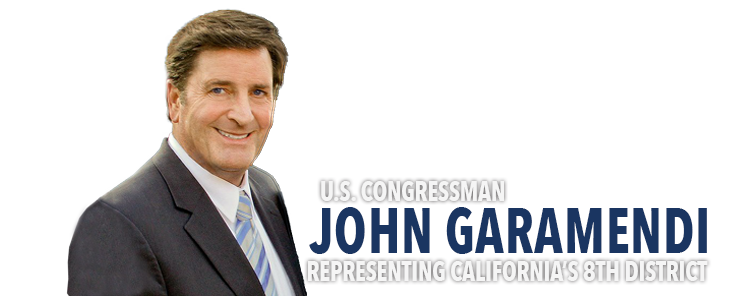
Reps. Garamendi, Peters Introduce Legislation to Combat Drought, Build Local Water Infrastructure
WASHINGTON, DC — Yesterday, Congressman John Garamendi (CA-08) a senior member of the House Transportation & Infrastructure Committee, Rep. Scott Peters (CA-50), Rep. Jim Costa (CA-21), Rep. Raul Ruiz (CA-25), Rep. Juan Vargas (CA-52), Rep. Mike Levin (CA-49) introduce the Drought Relief Obtained Using Government Help Today (DROUGHT) Act, to help address the Western water crisis caused by severe and ongoing drought conditions affecting the Colorado River and its reservoirs.
The DROUGHT Act would allow drought-impacted and underserved communities to both bring in additional federal funds and remain eligible for long-term, low-interest Water Infrastructure Finance and Innovation Act (WIFIA) loans. It does not affect the obligation of borrowers to repay their loans, the timeline for repayment, or interest rates of applicable loans.
"Every Californian deserves access to safe, clean, reliable drinking water. I'm proud to join Congressman Peters in introducing the DROUGHT Act to ensure communities have the resources and federal support they need to advance equitable, sustainable water infrastructure projects," said Rep. Garamendi.
“San Diegans know we cannot take our water for granted — that’s why the city and county are investing in long-term solutions like Pure Water,” said Rep. Peters. “The federal government must help communities across America invest in much-needed drought relief and prevention projects as we continue to face the worsening effects of climate change. Clean water is one of our most basic needs, and I look forward to working with my colleagues in Congress and our local partners to ensure every American has access to safe, reliable water.”
“Access to reliable water is essential for every community. Large-scale water projects have long supported our local communities, and increasing federal assistance for drought-prone, low-income areas where access to safe drinking water is often limited will help meet the growing demands on our water infrastructure. As our climate changes and aging infrastructure requires updates, we must continue expanding support for new water projects to ensure every community has the water it needs,” said Rep. Costa.
“The DROUGHT Act is a commonsense step to help drought-prone communities access the federal support they need to build resilient water infrastructure. By increasing WIFIA funding for projects in low-income and high-need regions, this bill ensures cost isn’t the barrier between families and reliable water supplies,” said Rep. Ruiz.
“Drought is a serious issue for our region, especially as the impacts of climate change intensify,” said Rep. Vargas. “I’m proud to introduce this legislation alongside my colleague, Congressman Scott Peters, to help make federal support for drought mitigation efforts and water projects more accessible for our communities.”
“Water is a basic human need. But many of our communities, especially in underserved areas, do not have reliable and affordable water supplies,” said Rep. Barragán. “The DROUGHT Act addresses this issue by increasing federal funds for infrastructure projects that provide Americans greater access to the water they need.”
“We must take every opportunity to invest in Southern California’s water infrastructure so that we are prepared for the next drought. Water supports our local economies, powers tourism, and allows our San Diego County farmers to grow avocados, tomatoes, flowers, and other crops,” said Rep. Levin. “The DROUGHT ACT will guarantee that federal loans are sufficient and accessible to support water infrastructure projects for the people of Southern California — both those living here today and the generations to come. I’m proud to join Rep. Peters in pushing this important legislation forward.”
Background
Currently, projects that receive loans under the Water Infrastructure Finance and Innovation Act (WIFIA) cannot accept assistance from the federal government for more than 80 percent of project costs. This federal share cap restricts financing options and leads to delays for state and local governments building much-needed water infrastructure projects. The DROUGHT Act would raise the limit from 80 percent to 90 percent for projects in areas experiencing extreme drought, projects of regional and national significance, or projects serving historically disadvantaged communities.
The DROUGHT Act has been endorsed by the U.S. Chamber of Commerce, the U.S. Conference of Mayors, the American Public Works Association, the California Association of Sanitation Agencies, and the San Diego County Water Authority, and the City of San Diego.
Full text of the bill is available here and a bill one-pager is available here.
###